
In early March, a lithography system independently developed by the Zelenograd Nanotechnology Center (ZNTC) was officially added to Russia's State Industrial Information System (GISP) and the national industrial equipment register—a major milestone for the country's semiconductor self-sufficiency push.
The system, model RAVC.442174.002TU, is Russia's first domestically developed alignment projection lithography machine. Designed for VLSI production, it achieves 350nm resolution, marking a concrete step toward building an independent microelectronics manufacturing equipment ecosystem.
Using 365nm i-line UV lithography technology, the system processes 200mm (8-inch) wafers with alignment error below 90nm and a 22×22mm exposure field. While 350nm lags behind leading-edge 3nm/5nm nodes, it remains highly practical for industrial-grade chips where reliability and stability matter more than miniaturization.
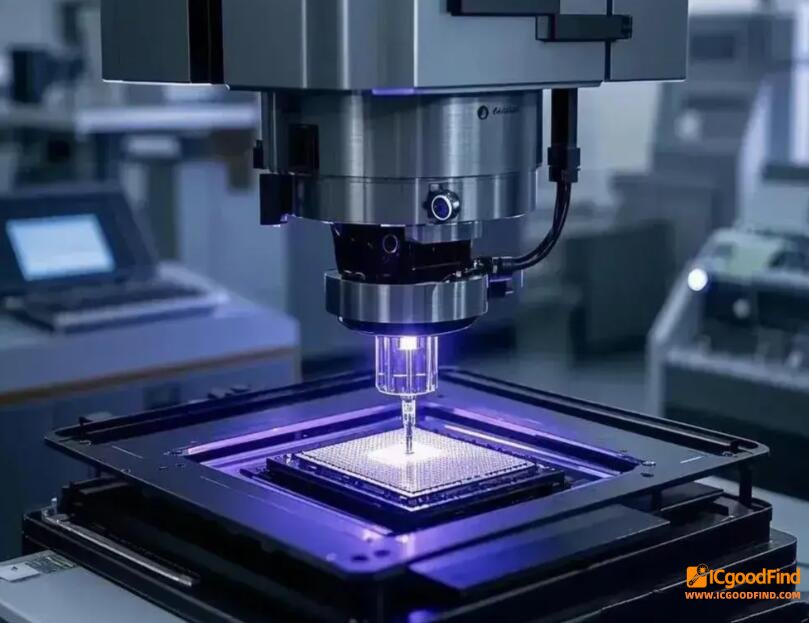
The machine entered production in 2024. Its inclusion in the national register means it's now certified for deployment across Russian fabs, with GISP listing enabling government and industrial procurement.
Developed jointly with Belarusian company Planar starting in 2021 with government funding, the project leverages Soviet-era microelectronics expertise and represents deep Russia-Belarus tech cooperation.
Despite being mature node, 350nm serves critical applications: automotive, power management, MCUs, industrial control, aerospace, and telecom infrastructure—sectors prioritizing reliability over size, with stable, substantial demand.
Russia's next target is 130nm resolution, aiming to expand domestic chip capabilities and narrow the gap with mainstream mature nodes.
ICgoodFind: Russia's 350nm lithography approval fills a critical equipment gap, securing chip supply for key sectors while adding a new option to the global mature-node equipment market.
